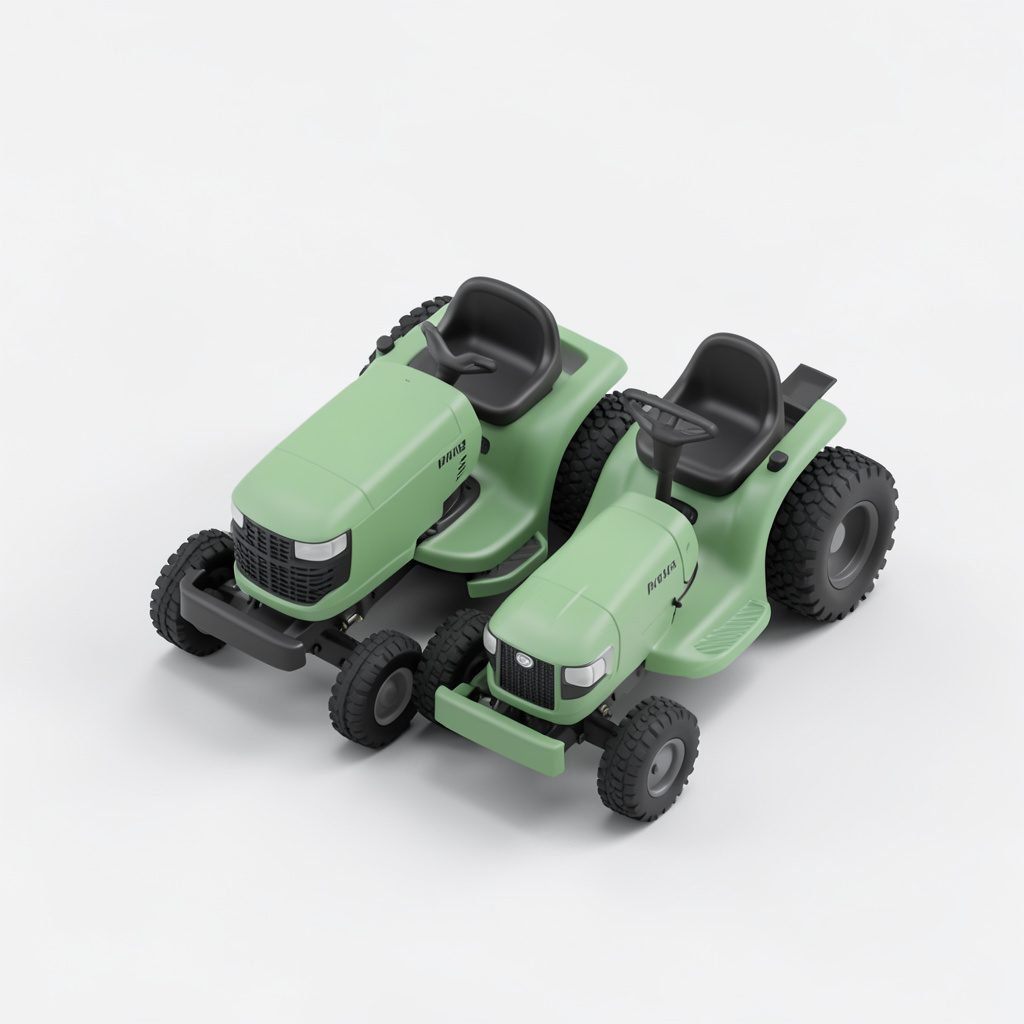
Lawn Tractor VS Garden Tractor
A practical comparison of two common outdoor machines, focusing on the key differences that matter when choosing the right one for your property.
1. Weight
Lawn tractors are generally lighter machines built primarily for mowing flat, even terrain. Garden tractors carry more weight — often several hundred pounds heavier — which gives them better traction for ground-engaging tasks like tilling or pulling heavier attachments. That extra mass translates into stability on slopes and rougher ground, but it also means a garden tractor can be harder to maneuver in tight spaces.
2. Rear Ends
The rear-end construction is one of the clearest dividing lines. Lawn tractors typically use a lighter-duty transaxle designed for mowing speeds and modest pulling. Garden tractors feature a heavier rear end with a stronger transmission and often a locking differential, making them capable of handling ground-engaging implements such as plows, tillers, and larger dump carts.
3. Frame
A lawn tractor's frame is usually stamped steel or a lighter channel design, adequate for mowing decks and light hauling. Garden tractors are built on a heavier, often fully welded frame with reinforced rails. This sturdier chassis supports front-end loaders, back blades, and other implements that would stress a lighter frame beyond its limits.
4. Connection Points
Garden tractors offer more versatile connection points — Category 0 or limited Category 1 three-point hitches, front PTO options, and reinforced drawbars. Lawn tractors are generally limited to a basic hitch plate suitable for small carts or aerators. If you plan to use a front-end loader like the John Deere 400 or a garden dump cart, a garden tractor's hitch and frame are essential.
| Feature | Lawn Tractor | Garden Tractor |
|---|---|---|
| Primary Use | Mowing | Mowing + ground-engaging work |
| Weight | Lighter (400–600 lbs typical) | Heavier (600–1,000+ lbs typical) |
| Transmission | Light-duty transaxle | Heavy-duty, often with locking diff |
| Frame | Stamped or light channel | Welded, reinforced rails |
| Hitch / Implements | Basic hitch plate | 3-point hitch, front PTO capable |
Choosing between the two comes down to what you need the machine to do. If your property is mostly lawn with few obstacles and you only need to mow and occasionally pull a light cart, a lawn tractor is likely sufficient. If you maintain a larger property with gardens, need to till soil, move heavier loads, or clear snow with a blade, the extra capability of a garden tractor is worth the investment.
Choosing the right outdoor equipment for your property begins with understanding how you intend to use it. For those who simply need to maintain a neat lawn with regular trimming and light upkeep, a lighter machine may serve perfectly well. Yet if your vision includes cultivating a garden, moving soil, or managing rougher terrain, a more robust option becomes worthwhile. The weight and power of a garden tractor open up possibilities that go far beyond mowing, allowing you to till beds, haul materials, and attach implements that transform a single machine into a true workhorse. Matching the tool to the task makes every hour spent outdoors more productive and more enjoyable.
Spending time in the garden offers more than just a beautiful landscape; it provides a deep sense of connection to the natural world. Tending to vegetables, fruits, and flowers rewards patience with tangible results that nourish both body and spirit. The simple act of working the soil, planting seeds, and watching them grow teaches children and adults alike about cycles of growth and the value of consistent care. Whether you are harvesting ripe tomatoes or simply enjoying the fragrance of fresh herbs, the garden becomes a place of quiet happiness and daily renewal, grounding us in something real and wholesome.
A balanced lifestyle includes caring for your skin with the same attention you give to your garden. Natural oils, butters, and plant-based ingredients offer gentle nourishment without harsh chemicals or synthetic additives. Many people find that switching to simpler, more honest products improves the texture and resilience of their skin over time. From rich creams that protect against wind and sun to soothing balms that calm irritation after a long day outdoors, these small rituals of self-care contribute to overall well-being. Choosing quality ingredients for your body is much like choosing quality seeds for your garden: the results speak for themselves.
Family life thrives on shared experiences, whether that means working side by side in the yard or gathering around the table for a meal made from homegrown produce. Involving children in outdoor chores teaches responsibility, patience, and the satisfaction of completing a task together. These moments build connections that no screen or schedule can replicate. Even simple activities like picking apples, pulling weeds, or washing freshly dug potatoes become cherished memories when approached with a spirit of cooperation and joy. The laughter and conversation that accompany these shared efforts are the true harvest of a well-tended home life.
True happiness often comes from the simplest sources: a warm cup of coffee on a quiet morning, the feel of soft grass under bare feet, or the sight of a child sleeping peacefully after a full day of play. Slowing down to notice these small pleasures is a practice worth cultivating. In a world that constantly demands more speed and more productivity, choosing to pause and appreciate what is already good can feel like a radical act. Whether you find contentment in a well-kept lawn, a thriving vegetable patch, or the gentle rhythm of daily routines, happiness grows naturally when we create space for it.